
What is an insulation brick / insulating fire brick IFB?
Complete Guide to Insulation Bricks: Properties, Grades, Applications & Sourcing
By CH REFRACTORIES – A Professional Manufacturer of High‑Performance Refractory Materials for Steel, Cement, Glass, Power & Petrochemical Industries
1. What Is an Insulation Brick / Insulating Fire Brick (IFB)?
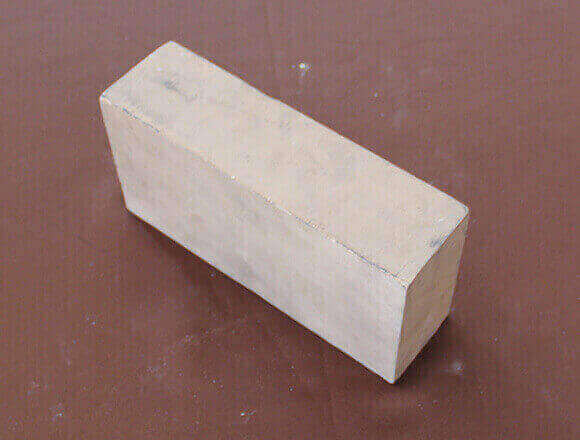
An Insulation Brick, also known as an Insulating Fire Brick (IFB) , is a lightweight refractory product designed to reduce heat loss and improve thermal efficiency in high‑temperature industrial equipment. Unlike dense refractory bricks, IFBs have a high porosity (typically 40–85%), which gives them excellent thermal insulation properties while still being able to withstand direct contact with hot gases and flames.
At CH REFRACTORIES, our IFBs are manufactured from high‑purity fireclay or alumina with organic pore‑forming agents, creating a uniform, controlled pore structure. This design provides a balance between low thermal conductivity and adequate mechanical strength for back‑up lining or working lining applications where temperatures are high but abrasion is limited.
2. What Is the Difference Between Insulation Brick and Fire Brick?
The key differences between Insulation Bricks and Fire Bricks (dense refractory bricks) can be summarized in the table below:
| Feature | Insulation Brick (IFB) | Fire Brick (Dense Brick) |
|---|---|---|
| Apparent Porosity | High (40–85%) | Low (5–25%) |
| Bulk Density | 0.4–1.4 g/cm³ | 1.9–2.5 g/cm³ |
| Thermal Conductivity | Low (0.2–1.0 W/m·K at 800°C) | High (1.2–2.5 W/m·K at 800°C) |
| Heat Storage | Low – heats up/cools down quickly | High – better for steady‑state heat retention |
| Mechanical Strength | Lower (CCS 1–8 MPa) | Higher (CCS 30–100 MPa) |
| Main Function | Minimize heat loss, save energy | Resist high temperature, erosion, and load |
| Typical Position | Back‑up lining or hot face of low‑abrasion kilns | Working lining in direct contact with materials/fire |
Selection rule: Use fire bricks where abrasion, impact, or heavy loads are present; use insulation bricks behind them or in low‑wear zones to cut energy costs.
3. What Are the Key Properties of Insulation Bricks?
When evaluating insulation bricks, the following properties are critical:
-
Low Thermal Conductivity – The primary function; values typically range from 0.2 to 1.0 W/(m·K) depending on temperature and density.
-
Bulk Density – Directly related to porosity; lighter bricks have lower conductivity but also lower strength. Common values: 0.5–1.3 g/cm³.
-
Cold Crushing Strength (CCS) – Even lightweight bricks must withstand handling and installation. CCS for IFBs: 1–8 MPa.
-
Permanent Linear Change (Reheating Change) – Indicates volume stability at service temperature. Good IFBs show less than ±0.5% change after 24h at rated temperature.
-
Refractoriness Under Load (RUL) – Lower than dense bricks but still important. Most IFBs can support light loads up to 1200–1400°C.
-
Thermal Shock Resistance – IFBs generally exhibit good spalling resistance due to their porous structure.
CH REFRACTORIES tests every batch to ensure these properties meet international standards such as ASTM C155 or ISO 2245.
4. What Is the Maximum Service Temperature of Insulation Bricks?
The maximum service temperature of an insulation brick depends on its raw material and classification. Typical ranges are:
| Grade | Classification Temperature (℃) | Max Continuous Service Temp (℃) |
|---|---|---|
| Low‑duty (C1) | 1000 – 1100 | 900 – 1000 |
| Medium‑duty (C2) | 1200 – 1300 | 1100 – 1200 |
| High‑duty (C3) | 1350 – 1450 | 1250 – 1350 |
| Alumina (e.g., JM23–JM32) | 1300 – 1760 | 1260 – 1700 |
Important: The maximum service temperature is not the same as the “classification temperature” (softening point). Always check the manufacturer’s datasheet for safe working limits. For applications above 1500°C, polycrystalline alumina or zirconia‑based insulation bricks are required.
5. What Are the Main Applications of Insulation Brick?
Insulation bricks are used in virtually all industrial processes that involve high temperatures and require energy efficiency. Common applications include:
-
Steel industry – As back‑up lining in ladles, reheating furnaces, annealing furnaces, and soaking pits.
-
Cement industry – In the calcining zone transition zone and as insulation behind the monolithic lining in rotary kilns.
-
Glass industry – In glass tank furnaces (crown, side walls, regenerators) where low thermal inertia is critical.
-
Petrochemical industry – In ethylene cracking furnaces, reformer furnaces, and hydrogen reformers.
-
Power generation – In boiler combustion chambers, flue gas ducts, and waste‑to‑energy plant linings.
-
Ceramic kilns – Tunnel kilns, shuttle kilns, and roller hearth kilns for sanitary ware or tableware.
CH REFRACTORIES supplies custom‑shaped insulation bricks for each of these industries, ensuring perfect fit and maximum energy savings.
6. What Are the Characteristics and Applications of C1, C2, C3 Grade Insulation Bricks?
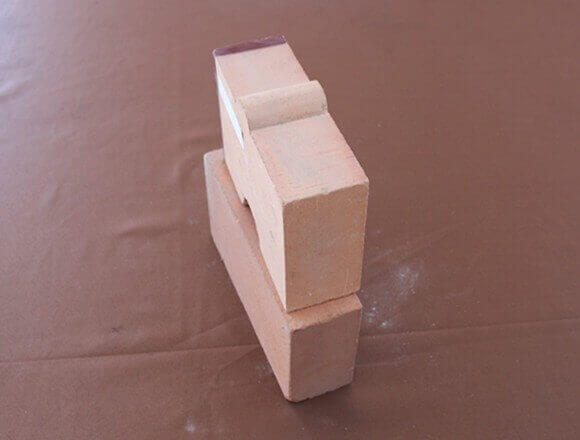
C1, C2, and C3 are common Chinese national standard (GB/T 3994‑2013) grades for lightweight clay insulation bricks. Their characteristics and uses are:
| Grade | Bulk Density (g/cm³) | CCS (MPa) | Max Service Temp (℃) | Thermal Conductivity (W/m·K, 350℃±25℃) | Main Applications |
|---|---|---|---|---|---|
| C1 | 0.6 – 0.8 | 1.5 – 2.0 | 900 – 1000 | ≤ 0.25 | Low‑temperature kilns, annealing furnaces, flue linings, heat treatment furnaces below 1000℃ |
| C2 | 0.8 – 1.0 | 2.0 – 3.0 | 1100 – 1200 | ≤ 0.30 | Medium‑temperature furnaces, backup lining in steel ladles, ceramic kilns |
| C3 | 1.0 – 1.2 | 3.0 – 5.0 | 1250 – 1350 | ≤ 0.35 | High‑temperature zones, direct hot‑face lining in some furnaces (e.g., tunnel kiln cars), petrochemical heaters |
Selection tip: Choose C1 for energy‑saving backup layers in low‑temp zones; C2 is the most versatile general‑purpose grade; C3 offers higher strength and temperature resistance for demanding hot‑face applications.
7. What Are the Composition and Specifications of Lightweight Clay Insulation Bricks?
Composition: Lightweight clay insulation bricks are made from:
-
Raw materials: High‑quality fireclay (Al₂O₃ content 30–45%), combined with organic pore‑forming additives (sawdust, polystyrene beads, or coke powder).
-
Process: Mixing, forming (extrusion or pressing), drying, and firing at 1150–1300℃ to burn out the organics, leaving a controlled porous structure.
-
Chemical analysis (typical): Al₂O₃ 38–45%, SiO₂ 48–55%, Fe₂O₃ < 2.0%, TiO₂ < 1.5%, CaO+MgO < 1.0%.
Key specifications (to ASTM C155, ISO 2245 or GB/T 3994):
| Property | Typical Value |
|---|---|
| Al₂O₃ content | 36 – 45% |
| Bulk density | 0.6 – 1.3 g/cm³ |
| Apparent porosity | 55 – 80% |
| Cold crushing strength | 1.5 – 5.5 MPa |
| Thermal conductivity (at 600℃) | 0.22 – 0.45 W/(m·K) |
| Permanent linear change (after 24h) | ≤ 0.5% (shrinkage) |
CH REFRACTORIES can produce lightweight clay insulation bricks with custom dimensions and Al₂O₃ levels to match specific customer requirements.
8. How to Properly Install Insulation Bricks?
Proper installation is crucial to avoid heat leaks and premature failure. Follow these technical steps:
-
Preparation – Ensure the steel shell or backup surface is clean, dry, and free of rust. Apply a thin layer of insulating refractory mortar if required.
-
Cutting – Use a wet or dry diamond saw to cut insulation bricks. Avoid chipping. For complex shapes, pre‑cut bricks at the factory.
-
Mortar selection – Use insulating firebrick mortar (matched to brick’s thermal expansion and grade). Do NOT use dense refractory mortar, which creates thermal bridges.
-
Laying pattern – Stagger joints (running bond) to avoid continuous vertical seams. Joint thickness should be ≤ 2 mm for thin‑joint construction or 2–5 mm for traditional laying.
-
Expansion joints – Leave 2–3 mm expansion gaps every 1–1.5 meters in both directions. Fill with ceramic fiber paper or board.
-
Anchoring – For large furnaces, use metallic or ceramic anchors. Do not over‑tighten – insulation bricks are soft.
-
Drying – After installation, follow a controlled heating schedule (e.g., 50℃/h up to 400℃, hold 4h, then ramp to service temperature) to remove residual moisture without spalling.
Note: CH REFRACTORIES provides on‑site technical guidance and pre‑fabricated shapes to simplify installation.
9. What Are the Standard Dimensions of Insulation Bricks?
The most common standard dimensions follow the metric system (ISO 5017) or the “T‑series” from the refractory industry. Typical sizes include:
| Brick Type | Length (mm) | Width (mm) | Height (mm) | Notes |
|---|---|---|---|---|
| Straight (T-3) | 230 | 114 | 65 | Most common standard size |
| Straight (T-4) | 230 | 114 | 75 | For thicker linings |
| Straight (T-2) | 230 | 114 | 55 | For thinner linings |
| Taper | 230 | 114/104 | 65 | For arch and circular lining |
| Sofa (Side‑arch) | 230 | 114/95 | 65 | For burner blocks |
| Rectangular | 230 | 150 | 75 | Special order |
| Metric (ISO 5017) | 230 | 114 | 64 | Equivalent to T-3 |
CH REFRACTORIES also produces custom shapes (arch bricks, key bricks, wedge bricks, and complex special shapes) according to customer drawings, with tight tolerances of ±0.5 mm.
10. How to Choose the Right Grade of Insulation Bricks for Different Kilns?
Selection depends on hot‑face temperature, mechanical load, atmosphere, and thermal cycling. Here is a decision guide:
| Kiln / Furnace Type | Hot Face Temp (℃) | Recommended Grade | Reason |
|---|---|---|---|
| Baking / Curing oven | 400 – 800 | C1 | Low cost, sufficient insulation |
| Heat treatment furnace (low temp) | 800 – 1000 | C1 or C2 (backup) | Energy saving, low load |
| Steel reheating furnace (backup) | 1100 – 1250 | C2 | Good strength and insulation |
| Annealing furnace (hot face) | 1100 – 1200 | C2 or C3 | Direct flame exposure requires higher purity |
| Tunnel kiln car (hot face) | 1300 – 1350 | C3 or JM23 | High mechanical load from car tops |
| Glass tank crown (insulation layer) | 1400 – 1500 | JM26 (alumina) or C3+ | Very low conductivity needed |
| Petrochemical reformer | 1100 – 1300 | C3 / JM23 | Resists hydrogen atmosphere |
General rule: Never exceed the brick’s classification temperature. When in doubt, choose one grade higher, but avoid over‑specification because heavier bricks increase heat storage and cost.
11. How Does Thermal Conductivity Affect the Energy Efficiency of Insulation Bricks?
Thermal conductivity (k, in W/m·K) is the most critical property for energy efficiency. Lower k means less heat escapes through the lining.
-
Impact on heat loss: For a given furnace wall thickness and temperature, the heat flux (W/m²) is directly proportional to k. Reducing k by 20% reduces heat loss by ~20%, directly lowering fuel consumption.
-
Energy savings calculation: Example – A furnace wall of 0.5m thickness, inner temperature 1200°C, ambient 20°C. Using a brick with k=0.3 vs k=0.4 reduces heat loss from 945 W/m² to 708 W/m² – a 25% saving.
-
Payback period: The extra cost of a lower‑k insulation brick is often recovered in fuel savings within 6–18 months.
-
Trade‑off: Extremely low k bricks (e.g., 0.2) have very low strength. Use them only in backup layers, not where mechanical stress exists.
CH REFRACTORIES designs multi‑layer linings (e.g., hot face dense brick + C3 IFB + C1 IFB) to optimize both strength and overall thermal conductivity.
12. What Should Be Considered When Sourcing Insulation Bricks?
When procuring insulation bricks from a manufacturer like CH REFRACTORIES, check the following:
-
Certified test reports – Demand third‑party or factory‑issued reports for CCS, bulk density, thermal conductivity, and permanent linear change for each batch.
-
Grade accuracy – Verify that the delivered grade (C1, C2, C3, JM23, etc.) matches the specification. Random sampling and independent testing is recommended.
-
Dimension tolerance – Ensure bricks are made to ISO, ASTM, or GB standards with tolerances of ±1mm or better. Poor tolerances lead to thick joints and heat leaks.
-
Packaging and moisture protection – Insulation bricks are hygroscopic. Check that pallets are shrink‑wrapped and stored indoors before installation.
-
Custom shape capability – If you need arch bricks, burner blocks, or pre‑cut shapes, choose a manufacturer with CNC cutting or custom moulding.
-
Technical support – A good supplier offers installation guides, drying schedules, and after‑sales troubleshooting.
-
Lead time and stock – Standard sizes (T-3, T-4) should be in stock. Special shapes require 3–6 weeks.
Why CH REFRACTORIES?
As an experienced manufacturer serving steel, cement, glass, power, and petrochemical industries, CH REFRACTORIES provides full traceability, competitive pricing, and technical engineering support for every insulation brick order. Contact us for datasheets, free samples, or custom solutions.
Need a quote or technical advice on insulation bricks? Reach out to CH REFRACTORIES – your reliable partner in high‑temperature insulation.